 EduVerticals Editorials
Posted 1 day ago

Executive SummaryReading BriefExecutive Summary: The narrative surrounding Global Capability Centers (GCCs) in India has reached a historic inflection point. No longer perceived as back-office cost arbitrage hubs handling mundane software maintenance, India’s 1,800+ GCCs have evolved into global strategic headquarters for Fortune 500 enterprises. In late 2026, multinational corporations in Bengaluru, Hyderabad, Pune, and NCR are appointing India-based Chief Data Officers (CDOs), Global Artificial Intelligence Directors, and Enterprise Centre-of-Excellence (CoE) leaders who own global P&L responsibilities, commanding compensation packages exceeding ₹1 Crore.
According to recent industry benchmarks from NASSCOM and global advisory firms, India’s GCC market now generates over $60 billion in annual export revenue, employing more than 2 million high-skilled professionals. More importantly, over 30% of global GCC roles in India are classified as high-value strategic positions, where leaders directly influence enterprise product architecture, global supply chains, and customer analytics for multinational banks, aerospace giants, and pharmaceutical conglomerates.
This structural evolution has triggered an intense talent reallocation. While entry-level software engineering salaries have stabilized due to automated coding tools, compensation for cross-functional leaders who combine computational data literacy with formal corporate management training has exploded. Pure technical specialists without business acumen find themselves locked out of top-tier executive bands.
The transformation of Indian GCCs from execution pods to global ownership hubs rests on four structural pillars:
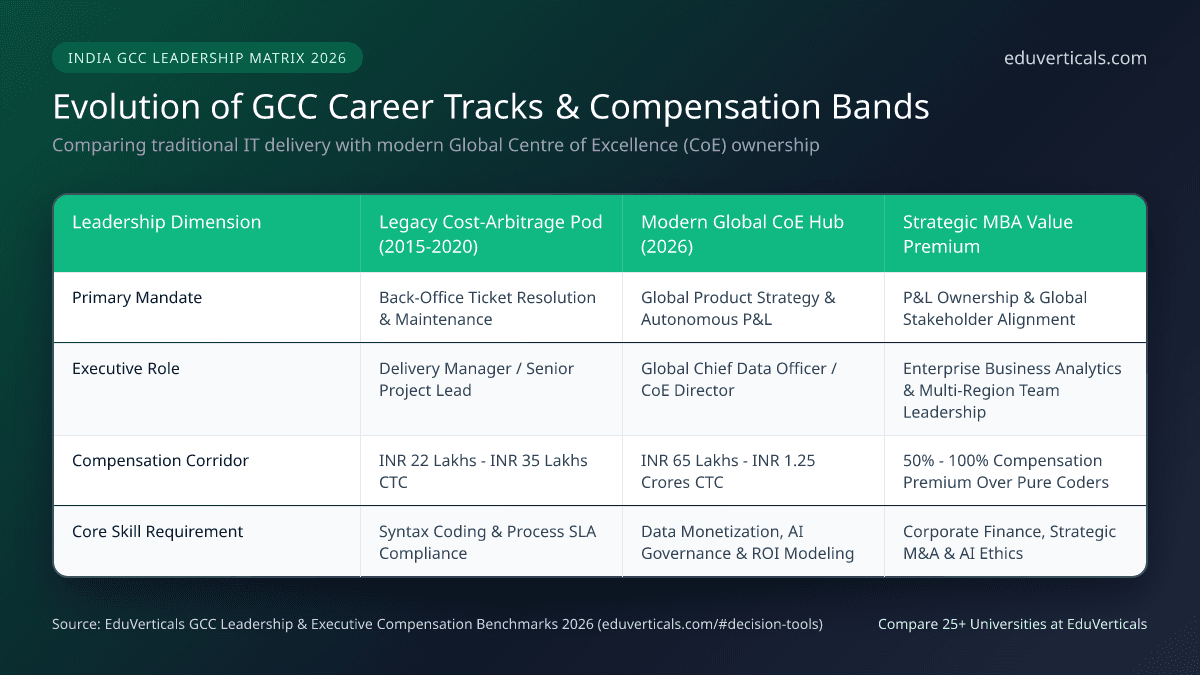
The corporate battlefield inside multinational GCCs has exposed a glaring reality: technical coding competence has become a commodity, while business translation is a high-priced scarcity. A brilliant data scientist who cannot explain the return on investment (ROI) of a $10 million neural network to the global board will never be promoted to Chief Data Officer.
Global executive search panels evaluate CoE candidates on their ability to manage complex cross-cultural stakeholders, negotiate enterprise software licensing, structure cross-border transfer pricing, and drive organizational change management. Executives who master corporate finance, strategic human resource management, and quantitative business analytics consistently earn 60% to 120% more than senior principal engineers with identical years of industry experience.
Select your career goal to tailor advice
Pair your engineering background with an Online MBA in Business Analytics & Product Strategy.
For engineering team leads, technical architects, and functional managers aiming for Director or Vice President designations in multinational GCCs, the fastest catalyst is acquiring an accredited management credential. A recognized postgraduate degree demonstrates to global HR committees that you possess the institutional leadership capacity to oversee multi-million-dollar operational budgets.
Leading working professionals balance demanding corporate responsibilities by enrolling in UGC-DEB entitled Online MBA programmes. Comparing options on the EduVerticals Academic Catalog allows you to explore accredited programmes from premier institutions such as Manipal University Jaipur (MUJ) and NMIMS Global Access.
Editorial BriefReading BriefExplore High-Growth GCC Career Pathways: Evaluate top-rated Online MBA programmes designed for working technology leaders. Review accredited university options and obtain a tailored shortlist from our admission partners on .
Keep the details close
Explore key programme specifications, recognition terms, fee components, and career outcomes side by side before applying.
India offers an unparalleled density of high-skilled digital engineering, AI, and managerial talent, combined with robust digital infrastructure, allowing multinational firms to transition from low-cost support to high-value global product innovation and autonomous CoEs.
Bring programme options, estimated fees and study flexibility into one view, with the trade-offs and questions to verify.
Tailored shortlist from our admission partners. Verify fees and eligibility before applying.


We have a team of over 12 experienced mentors with over 26+ years of collective experience available to guide you at a moment's notice.