 EduVerticals Editorials
Posted 1 day ago
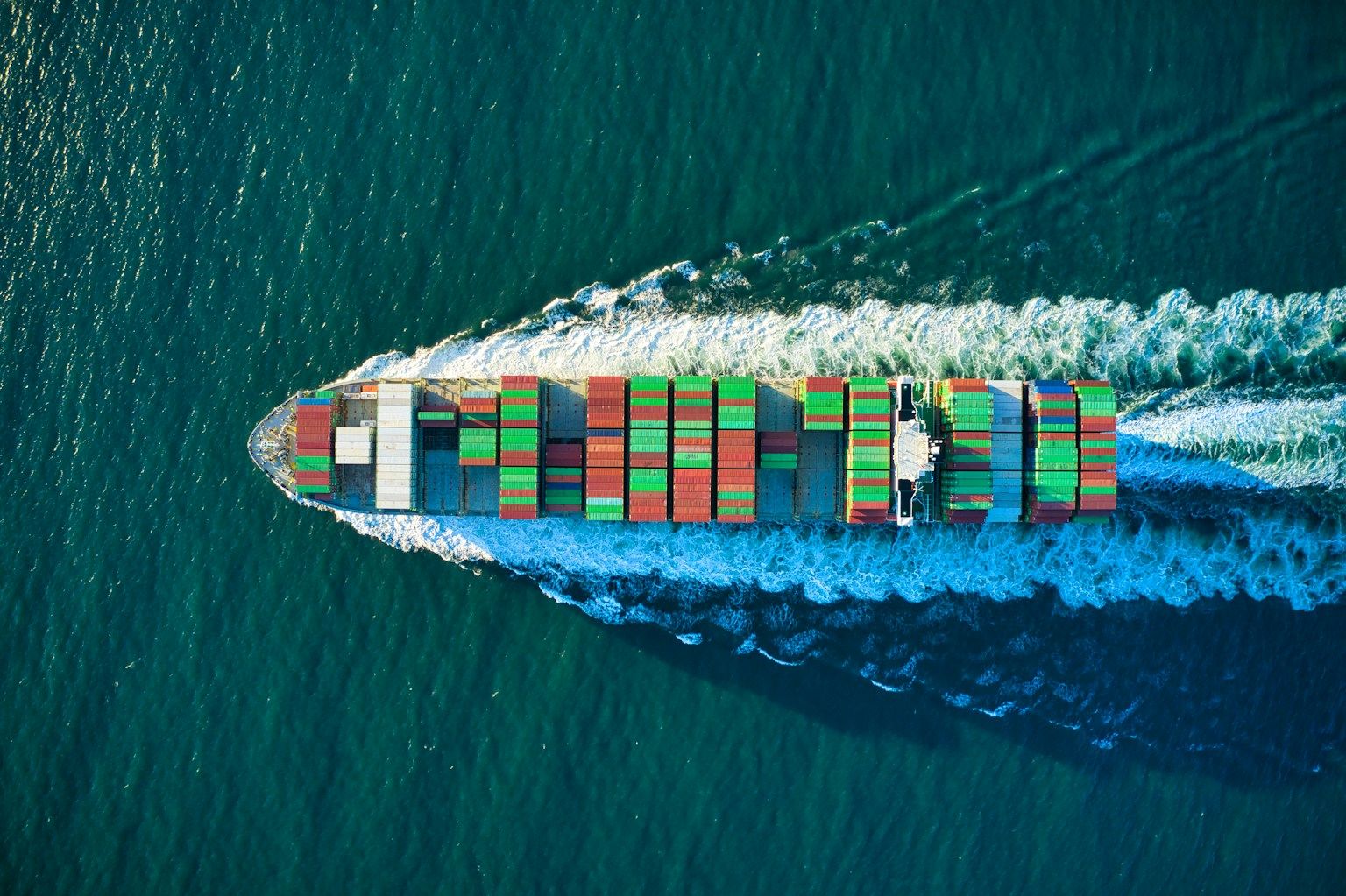
Executive SummaryReading BriefExecutive Summary: India’s total combined monthly exports (encompassing both merchandise and high-value commercial services) crossed the historic $90-billion milestone in late 2026, solidifying the nation’s standing as an indispensable engine of global commerce. Yet behind this record export momentum lies an equally formidable economic reality: persistent merchandise trade deficits exceeding $24 billion monthly, driven by non-discretionary imports of crude energy, electronics intermediate assemblies, and precious commodities. To navigate this high-stakes macroeconomic balancing act, corporate exporters, multinational conglomerates, and logistics operators are aggressively recruiting specialized operations directors, export controllers, and trade finance strategists capable of optimizing cross-border trade flows, leveraging Free Trade Agreements (FTAs), and maximizing duty remission schemes.
When trade statistics are released by the Ministry of Commerce & Industry, headline observers often cheer export growth while expressing concern over trade deficits. For corporate practitioners, however, the interplay between $90 billion in exports and high-volume imports is a matter of operational engineering and working capital velocity. India’s export competitiveness increasingly depends on imported raw materials and capital machinery: from silicon wafers and semiconductor components assembled in electronics hubs to crude petroleum refined into high-value export chemicals.
In this complex, interconnected trade architecture, a misstep in customs valuation, an unverified Certificate of Origin under a newly signed Free Trade Agreement, or an improperly structured Letter of Credit (LC) can freeze shipments, trigger prohibitive financial penalties, and destroy hard-won international customer relationships. The modern enterprise needs leaders who combine regulatory mastery with sophisticated operational execution.
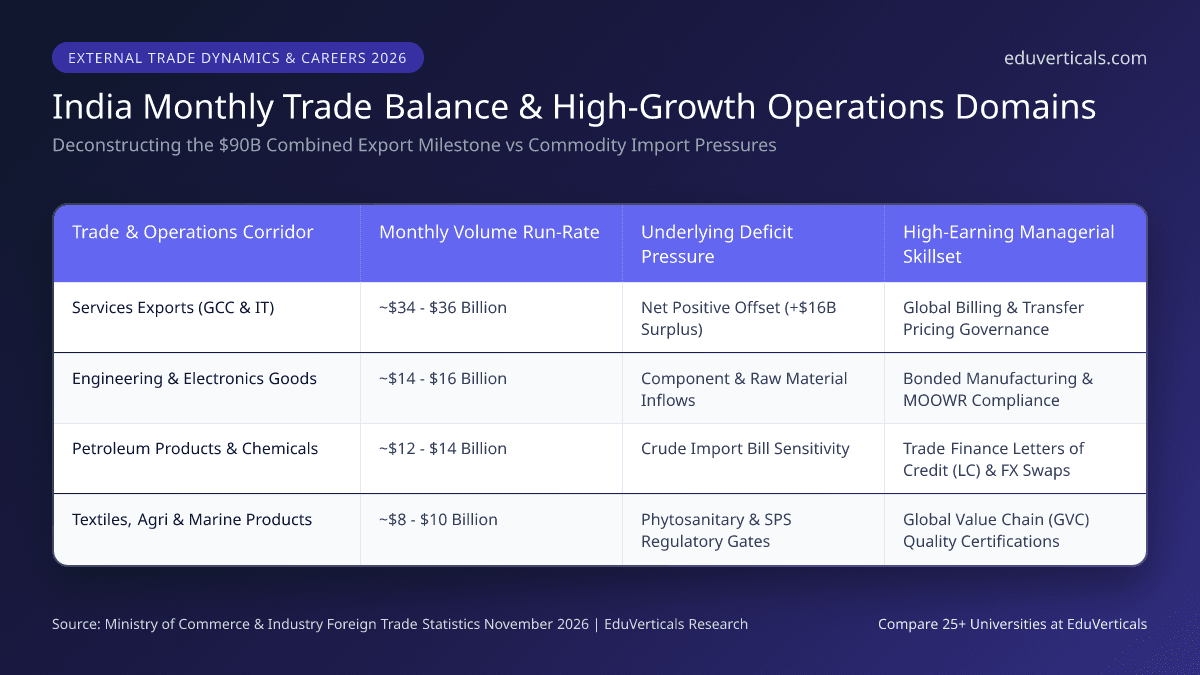
India’s late-2026 trade footprint reveals a dual-speed external sector characterized by surging high-tech manufacturing, resilient software services, and persistent structural import dependencies.
Managing cross-border commerce at national scale requires deep institutional capability. The difference between an export business unit that generates 18% return on capital and one that stalls in regulatory red tape lies in the competency of its global operations managers.
Consider the Authorized Economic Operator (AEO) certification and bonded warehousing under the Manufacturing and Other Operations in Warehouse Regulations (MOOWR) scheme. Companies operating under AEO-Tier 2 accreditation receive green-channel customs clearance, zero container physical examination at major ports (Nhava Sheva, Mundra, Chennai), and deferred duty payment privileges. Operations leaders who architect these compliance frameworks save their enterprises millions of dollars in port demurrage and working capital finance charges.
Select your career goal to tailor advice
Master export-import banking, buyer's credits, and currency risk. Consult our University Comparison Report or book a Free Mentor Call.
The surge in Indian cross-border commerce has created an unprecedented executive hiring cycle. Export houses, multinational logistics providers, and industrial conglomerates are offering ₹30 LPA to ₹65 LPA compensation packages for Export Operations Heads, International Trade Directors, and Global Logistics VPs.
Because experienced logistics supervisors and export executives cannot quit their full-time jobs, UGC-DEB entitled Online MBAs in International Business and Supply Chain Management have emerged as the primary career launchpad. Renowned institutions such as NMIMS CDOE provide specialized degree tracks covering international trade law, global logistics architecture, cross-border corporate finance, and commercial risk management.
As we discussed in our analysis on Will AI Replace MBA?, automated software can generate invoices, but it takes strategic executive judgment to negotiate international trade disputes, structure multi-jurisdictional banking lines, and architect global supply chains. To explore approved university programs, check the EduVerticals Academic Catalog.
Editorial BriefReading BriefChart Your Global Trade Career Trajectory: Explore specialized International Business and Supply Chain MBA programs across India’s premier institutions on .
Keep the details close
Explore key programme specifications, recognition terms, fee components, and career outcomes side by side before applying.
The export surge is driven by strong double-digit growth in software services and Global Capability Centers (generating over $35B monthly), combined with scaling merchandise exports in smartphones, consumer electronics, pharmaceuticals, and precision automotive components under PLI schemes.
Bring programme options, estimated fees and study flexibility into one view, with the trade-offs and questions to verify.
Tailored shortlist from our admission partners. Verify fees and eligibility before applying.


We have a team of over 12 experienced mentors with over 26+ years of collective experience available to guide you at a moment's notice.