 EduVerticals Editorials
Posted 1 day ago

Executive SummaryReading BriefExecutive Summary: When global peripherals titan Logitech made international headlines by announcing a dedicated paid company holiday for its 7,000 global employees to celebrate the launch of Grand Theft Auto VI, traditional management circles debated whether the move was visionary culture-building or reckless indulgence. In late 2026, corporate human capital data confirms the economic verdict: "cultural tentpole leave" is a calculated, high-ROI retention strategy. In knowledge-intensive industries where replacing an experienced software architect or senior product manager costs 150% to 200% of their annual salary, strategic leaves generate massive net financial savings.
Modern human resource management has entered an era of radical economic transparency. For decades, corporate human resource policies relied on rigid, archaic leave structures: a fixed allotment of sick days, casual leaves, and earned privileges dictated by standard industrial labor codes. However, in high-cognitive-load sectors like technology, game design, quantitative finance, and digital product engineering, employee engagement cannot be managed like a 19th-century manufacturing assembly line.
When monumental global cultural events occur—whether the release of a generational entertainment franchise, global sporting milestones, or historic space missions—unplanned absenteeism, fraudulent sick calls, and unproductive "presenteeism" inevitably spike. By formally anticipating these cultural tentpoles and declaring synchronized organizational pauses, forward-thinking enterprises transform an inevitable productivity loss into an extraordinary employer branding triumph.
To understand why cultural tentpole leave makes compelling balance-sheet sense, corporate leaders must analyze the true financial anatomy of voluntary employee turnover:
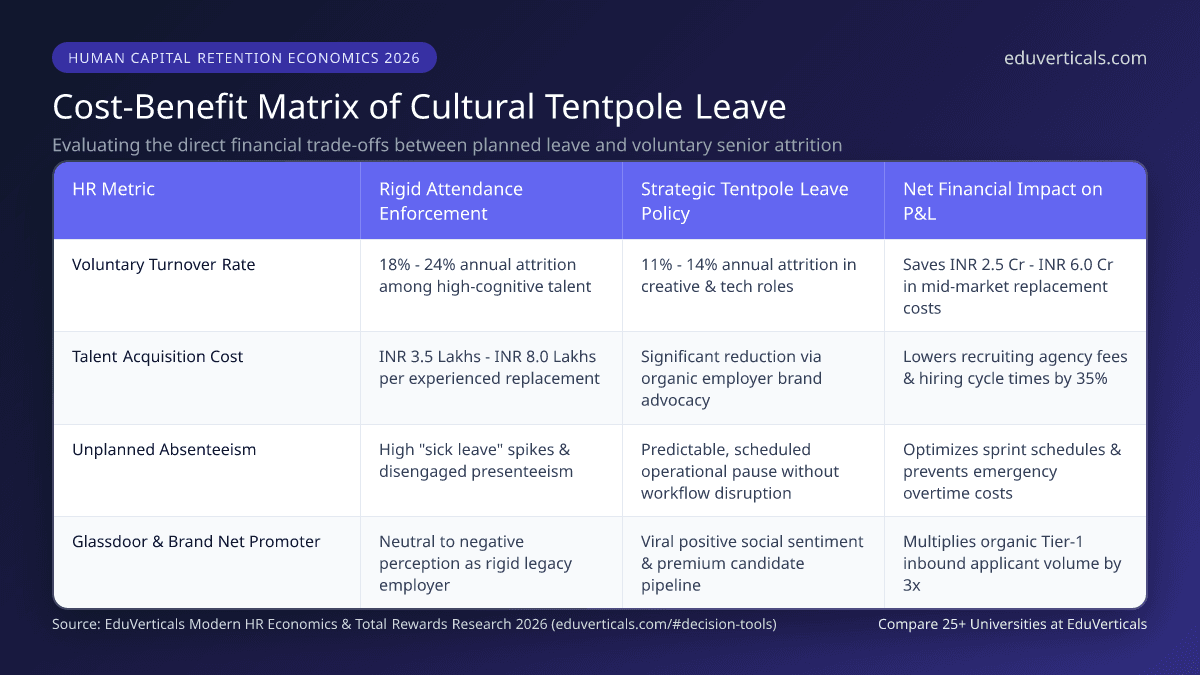
The success of cultural tentpole leaves highlights a broader transformation in executive total rewards design. In 2026, compensation is no longer measured solely in gross salary packages and employee stock options (ESOPs). High-performing knowledge workers actively evaluate psychological autonomy, workplace empathy, and cultural alignment.
However, implementing progressive leave policies requires sophisticated human capital leadership. CHROs must ensure that flexible benefits do not compromise client service-level agreements (SLAs), regulatory reporting deadlines, or enterprise security protocols. Designing balanced total rewards frameworks requires leaders who understand both organizational psychology and quantitative managerial accounting.
Select your career goal to tailor advice
Master compensation benchmarking, flexible benefit taxation, and retention ROI modeling.
As organizations recognize human capital as their primary competitive differentiator, the demand for strategic, data-literate HR executives has surged. CHROs are no longer secondary functionaries; they are core members of executive compensation committees and board risk panels, directly accountable for corporate performance.
To step into these high-compensation executive roles, HR professionals must augment their interpersonal expertise with formal financial and strategic training. Enrolling in an accredited Online MBA allows working professionals to acquire these skills without interrupting their corporate trajectory. Compare premier universities on the EduVerticals Academic Catalog and explore tailored human resource tracks from institutions like NMIMS Global and Manipal University Jaipur.
Editorial BriefReading BriefAccelerate Your Human Resources Leadership Career: Explore how accredited executive programmes in Human Resource Management can help you master the financial and strategic drivers of talent retention. Receive a tailored shortlist from our admission partners on .
Keep the details close
Explore key programme specifications, recognition terms, fee components, and career outcomes side by side before applying.
Cultural tentpole leave refers to paid, company-wide or departmental holidays synchronized with major global cultural, entertainment, or community milestones to celebrate shared passions, prevent unplanned absenteeism, and boost employer branding.
Bring programme options, estimated fees and study flexibility into one view, with the trade-offs and questions to verify.
Tailored shortlist from our admission partners. Verify fees and eligibility before applying.


We have a team of over 12 experienced mentors with over 26+ years of collective experience available to guide you at a moment's notice.