 Aditi Chouri
Posted 1 year ago

In today’s globalized economy, earning an MBA is more than just a career upgrade—it is a strategic move. But one of the biggest questions for aspiring candidates is: Should I pursue my MBA from India or go abroad?
This guide breaks down the advantages, disadvantages, and costs of doing an MBA in India vs overseas to help you make a smart and informed decision.
India is the home to some of the most prestigious B-schools like the IIMs, ISB, XLRI, SPJIMR, and MDI. In recent years, even tier-2 colleges have enhanced their curriculum and placements, making MBA in India a strong contender.
Let us look at the pros and cons of MBA from India:
Affordability: Tuition fees are significantly lower compared to international schools. Top IIM programs cost ₹20–25 lakhs, while private colleges may cost less.
Familiarity with job market: Indian B-schools align with domestic hiring trends, making placement smoother for jobs in India.
Growing brand value: IIMs, ISB, and other institutions are gaining global recognition.
Competitive entrance exams: CAT, XAT, NMAT filter top talent, ensuring peer quality.
Limited global exposure: MBA from India provides fewer international student exchanges or global faculty in most programs.
Placements are often India-focused: Most recruiters who visit the campus are domestic firms or Indian arms of MNCs.
High competition: Acceptance rates at IIMs are lower than Harvard in percentage terms.
Pursuing an MBA abroad is a dream for many, especially in countries like the USA, UK, Canada, Australia, France, and Germany. It’s often seen as a gateway to global opportunities and cross-cultural learning.
Global exposure: MBA from abroad provides diverse classrooms, international faculty, and multinational peer groups.
Better ROI in long run: Top MBAs from schools like Wharton, MIT Sloan, London Business School, and HEC Paris provide you with high-paying global roles.
Flexibility in specializations: Options like sustainability, entrepreneurship, luxury management, and analytics are more widely available that may not be the case in MBA from India.
International work opportunities: Students often get to work in the country from where they are pursuing or in some other country.
High cost: Tuition fee can range between ₹50 lakhs to ₹1.2 crore, excluding living expenses and the student may have to work part-time to cover the expenses.
Visa and immigration challenges: Staying abroad post-study often depends on visa rules.
Intense application process: Exams like GMAT/GRE, TOEFL/IELTS, SOPs, and LORs are prerequisites in many institutes.
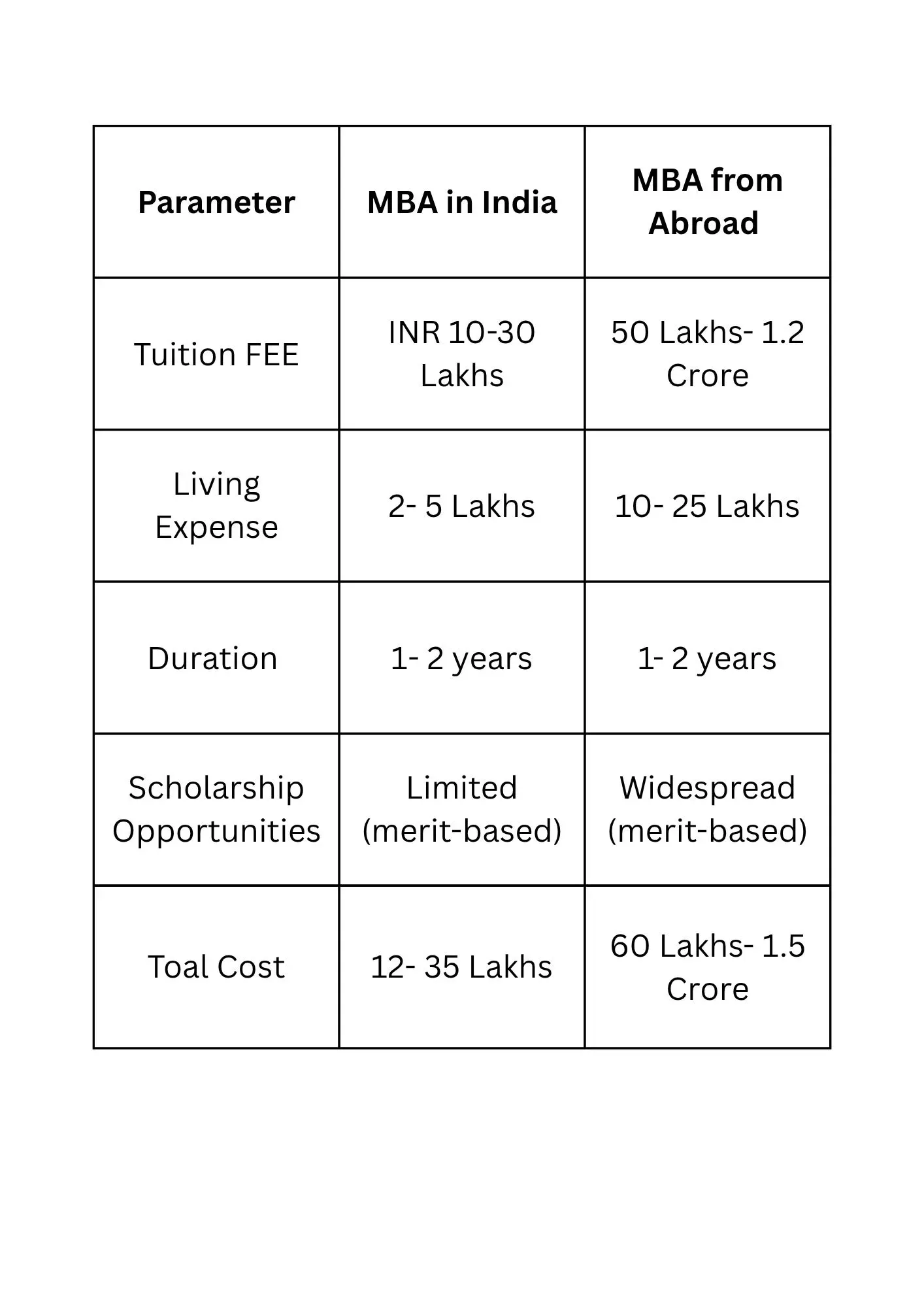
Career Goals: Want to work in India long-term? Indian MBA is optimal.
Planning to build a global career? Consider going abroad.
But it does not mean that after pursuing MBA from India you cannot get global roles, it is upto you how you utilise your MBA degree.
Budget & ROI: Think long-term. Higher investment abroad may lead to higher salaries, but with greater risk.
Duration & Opportunity Cost: 1-year programs (like INSEAD or ISB) minimize career breaks.
Networking Goals: Indian B-schools offer strong domestic networks whereas foreign schools provide global access.
Admissions Profile: If your academic scores, work experience, and extracurriculars are strong, you may have better chances abroad.
There is no one-size-fits-all answer to the India vs Abroad MBA debate. It depends on your career aspirations, finances, and lifestyle goals.
An MBA from a top Indian B-school can open doors in leading Indian companies and global MNCs operating locally. An international MBA, on the other hand, may be the launchpad to a truly global career and a steeper upfront cost.
Pro Tip: You can also explore hybrid models or online MBAs from international universities, which offer global exposure at lower costs and you may get a job abroad.


We have a team of over 12 experienced mentors with over 26+ years of collective experience available to guide you at a moment's notice.