 Aditi Chouri
 Posted 11 months ago
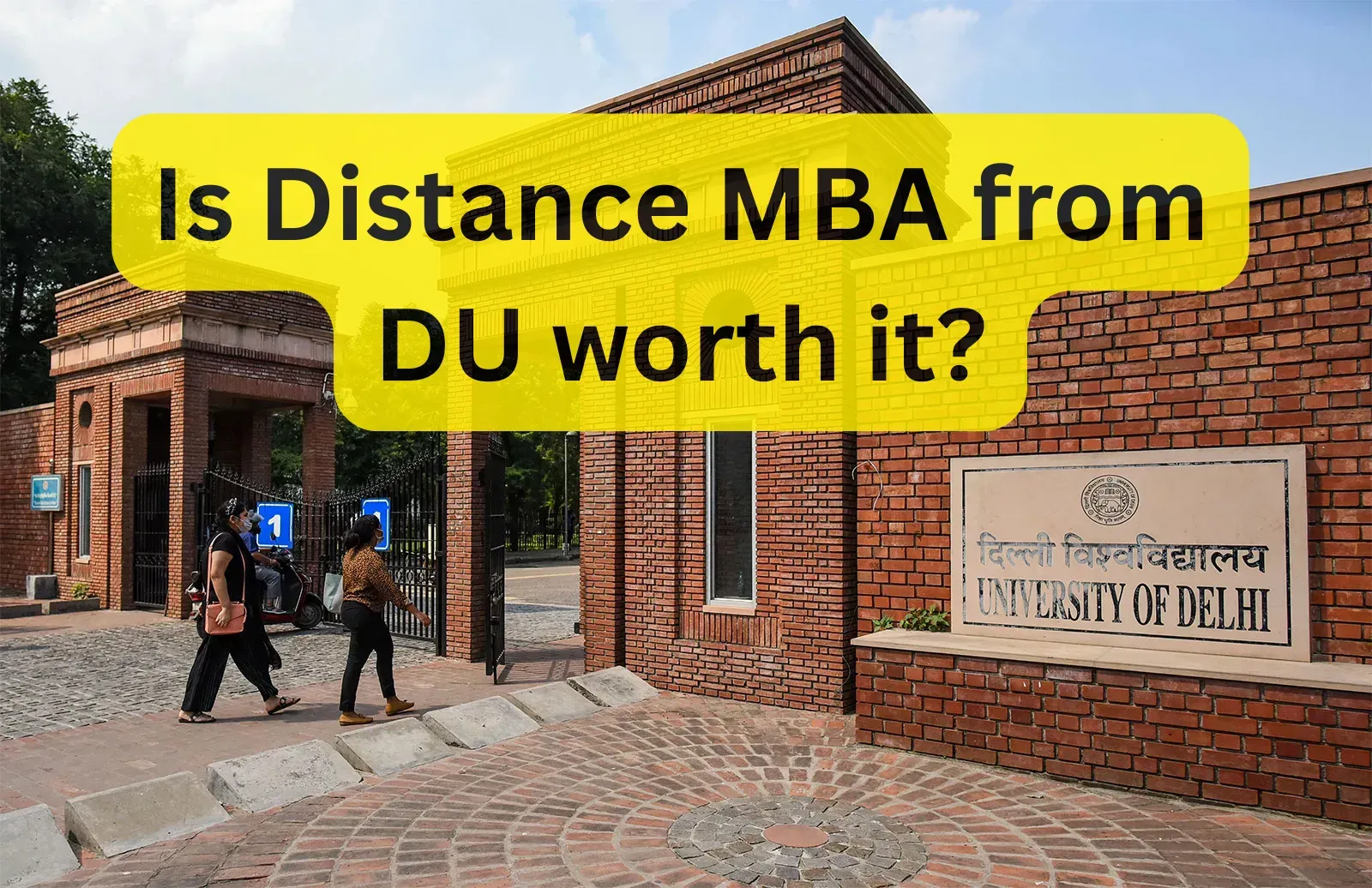
Distance and online education have grown significantly in India over the last decade. Among the many choices available, a Distance MBA from Delhi University often stands out because DU is one of the most trusted and well known institutions in the country. However, when students consider pursuing a Distance MBA from DU, they naturally ask whether it is truly worth it. The answer depends on what you expect from the program and how it aligns with your career plans. This blog takes you through the value, strengths, limitations and overall worth of a Distance MBA from DU.
Delhi University offers its Distance MBA through the School of Open Learning also known as DU SOL. The program is officially recognized and designed to help working professionals, fresh graduates and students who need flexible learning options. DU’s brand value itself creates a sense of trust but as with any academic decision it is important to look at the details closely.
Delhi University is one of the most respected educational institutions in India. Its name adds credibility to your academic profile. Employers generally do not doubt the authenticity of DU degrees and this alone becomes a major advantage, especially when applying for government jobs or roles in traditional sectors.
One of the biggest advantages of DU’s Distance MBA is its affordability. Compared to private universities and many online MBA programs, DU offers a much lower fee without compromising on legitimacy. This makes the program ideal for students who want a recognized management degree but have budget constraints.
Since this is a distance program, it allows you to continue with your job while studying. There are no mandatory regular classes, which means you can learn at your own pace. This flexibility is particularly beneficial for those who cannot quit their job or relocate to pursue a full time MBA.
The curriculum at DU SOL follows a traditional management structure. It covers core subjects like marketing, finance, operations, organizational behaviour and human resource management. The content focuses on conceptual understanding, which is useful for building a strong theoretical base.
If your goal is to apply for government exams or roles in the public sector, a DU degree holds significant value. The recognition of DU across states and departments ensures that students do not face issues related to degree validity.
A major drawback of DU’s Distance MBA is the lack of real time industry interaction. Since the program is not designed with strong corporate integration, students may miss opportunities such as internships, live corporate projects or regular interaction with industry experts. This makes the program less suitable for students who want a practical or corporate oriented MBA experience.
DU SOL does not offer a structured placement cell for Distance MBA students. Unlike many private universities and online MBA providers who have dedicated placement teams, DU offers very limited support in this area. Students have to rely entirely on self effort to find opportunities.
The curriculum at DU SOL is more theory driven and has a slower update cycle. Modern management programs often include subjects like digital marketing, business analytics, data driven decision making and AI based business strategies. These subjects are not given as much emphasis in traditional distance programs.
MBA programs are known for their peer learning environment. In a distance mode, interaction with fellow students and faculty members remains minimal. This reduces networking opportunities and students may feel isolated during the learning process.
Students who prefer interactive learning tools like simulations, digital case studies and video based content may find DU’s material slightly outdated. The learning experience is more academic and text based.
A Distance MBA from DU is a good choice for specific types of learners and career goals.
It is ideal for working professionals who want an additional qualification purely for career stability, promotions or eligibility criteria. Many organizations value the DU brand and a distance degree can help employees meet educational requirements without disturbing their job schedule.
It is also suitable for students preparing for government exams since DU’s recognition is widely accepted in public sector jobs. Additionally, individuals who want an affordable MBA with basic management knowledge will find this program valuable.
However, this program may not be the best choice for students who want to enter competitive corporate roles or switch careers into dynamic fields like consulting, analytics, digital marketing or product management. It may also not be ideal for fresh graduates seeking placement support.
The worth of a Distance MBA from DU depends on your expectations. If you want a highly affordable, flexible and academically reputable degree, DU serves the purpose very well. Its brand value, government recognition and low fee make it a sensible option for many. However, if your priority is placement support, industry exposure or modern skill development, the program may not fully meet your expectations.
DU’s Distance MBA works best for students who have clarity about why they are pursuing the degree and who understand that self effort plays a major role in career outcomes. It is not designed as a job oriented MBA but rather as an academic and qualification driven program.
Yes, a Distance MBA from DU is worth it for learners who want recognition, affordability and flexibility. It is particularly useful for working professionals and government job aspirants. At the same time, students should be aware of the limitations related to placements, industry exposure and modern curriculum updates.
Choosing this program becomes valuable when you combine it with skill building, internships, certifications and self driven career planning. With the right expectations and additional efforts, a Distance MBA from DU can be a meaningful step in your professional journey.
If you want to explore better options than DU for an online or distance MBA then connect with us today and our experts will guide you toward the right program for your career goals.


We have a team of over 12 experienced mentors with over 26+ years of collective experience available to guide you at a moment's notice.